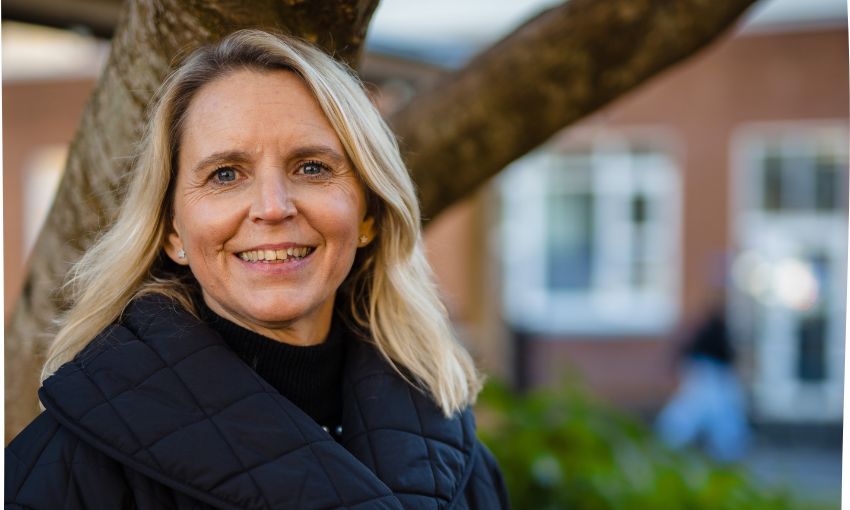
Hi, my name is Sonia Fajkis and I completed the Secondary PGCE (Modern Foreign Languages) at Cardiff Met. For me, completing the PGCE meant a career change. I graduated in French Language and Literature in Poland and my love of languages and literature led me to complete a PhD in comparative literature. Although I loved (and I still do) reading old manuscripts, I always felt that teaching was my vocation. Whenever I had a chance to teach, be it at university or privately, I was always in my element. So, in 2021 I made the decision to listen to my calling and I applied for the Secondary PGCE at Cardiff Met.
From the very beginning we were told that the course would be very demanding and indeed it was. However, I think the programme was well-structured and it helped us manage the challenge. We would spend three or four days on placement and Fridays were our university days where we would meet with our subject tutor. In hindsight, having an outlet for talking with other students and our tutor at the end of the week was very important because it gave us a sense of safe space and time where we could discuss our highs and lows and help each other. I also loved our Friday sessions because our subject tutor, Kerry Bevan, introduced us to a variety of language teaching approaches which had been invaluable when planning lessons. She also encouraged us to think critically about our subject, why and how we teach it – a perspective that I keep reflecting on now as an NQT. I was always leaving our Friday sessions feeling inspired and ready to recharge my batteries at the weekend.
I also liked the fact that the university invited speakers from different schools and settings to speak to us about various aspects of teaching. We had sessions on racism, additional learning needs, more talented learners, and many other subjects which helped me better understand what teaching involves and made me more aware practitioner in classroom.
I had two placements in very different settings and I loved them both. At the beginning of the placements, I mostly observed the lessons but then incrementally I was expected to teach parts of and then full lessons. At first it was daunting standing in front of the class (not always interested in learning languages) and being observed by different teachers, but I got used to it very quickly. It doesn’t mean that the feeling of slight anxiety before each lesson disappeared; it was there, and still is even now in my NQT year, but one of my mentors told me that it means that I care about my learners and their leaning and that is a good thing.
In both placements I had one-to-one weekly sessions with my mentors and it was time where we could discuss my progress, what I was doing well and what I had to work on. Those sessions were tailored to my needs and both my mentors were incredibly supportive and nurturing. Also, when I look back at my placement time in schools, I realise that I met a host of inspiring practitioners who were always welcoming to me as a student teacher. They were always happy for me to observe their lessons and give advice if I came with a specific focus in mind. Sometimes the shortest chats with them (teachers are very busy) became ‘the penny dropped’ moments where I changed my way of thinking completely or it confirmed that what I was doing was right. All those interactions with mentors, senior mentors and teachers in schools were very precious and helped me become a teacher I am today.
The Secondary PGCE was incredibly challenging and demanding in many ways. I had to juggle lesson planning, lectures at university, academic work and family life. At times it felt overwhelming, but I never felt alone – I had a lot of support from other student teachers, our subject tutor and mentors and teachers in our placement school.
Towards the end of my second placement, I secured a one-year position as a French teacher at Stanwell School in Penarth. Looking back, I feel the Secondary PGCE prepared me well to the realities of being a teacher. It gave me solid foundations on which I can carry on building my career and broaden my perspectives about what teaching is about.
Changing career a bit later in life is never an easy decision to make but for me it was definitely the right one.
My Top Tips
- Be organised – As the placements progress, you’ll be expected to teach more and more lessons. Keeping on top of your planning will be essential and will make your life so much less stressful.
- Embrace failure – Since I’m a perfectionist I think that was the hardest part for me to learn. There will be lessons that won’t go to plan however much time and planning you spent on it. However, it is a good experience to have as I believe I learned the most from lessons that went wrong. It gave me pause for thought and an opportunity to discuss it with my mentor and get their perspective.
- Approach your academic assignments from the point of view of what really interests you or what you really want to know – This will really help you writing it, especially when it comes to the first assignment, which is more theoretical. This way, the assignments enriched my practice not only during the PGCE but beyond it as well: in my NQT year I keep coming back to the findings and knowledge I gained while working on the assignments.
- Be clear what you want from your Enrichment – think what aspect of teaching, even in the broadest terms, interests you and have a draft plan of what you’d like to do in the Enrichment school before you start it. It could be a long three weeks if you spend it only observing lessons. Teachers in schools may be open for you to lead some of the lessons or projects.
- In your lesson planning, focus on what you really want pupils to learn – This may sound obvious but sometimes the number of possible activities, different approaches can distract you from the real purpose of the lesson. It is a good habit to have and it will help you with planning lessons later on when you are an NQT.