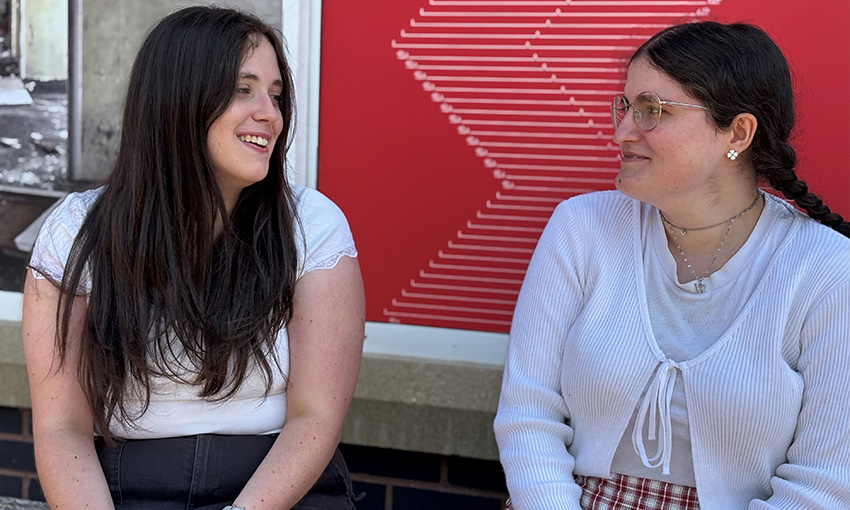
Before starting our psychology degree at Cardiff Metropolitan University, we hadn’t even heard of Reflective Practice—let alone understood how powerful and transformative it could be. Fast forward 60 hours into our placement, and it’s become something we not only understand, but truly value.
Under the guidance of Dr Katherine Fitzgerald, Clinical Psychologist and Lecturer in the Applied Psychology Department, we took on the role of Reflective Practice Representatives. This role wasn’t just about observing; it was about getting involved, learning by doing, and helping bring reflective practice to life for students and professionals alike.
Reflective practice is all about learning from your experiences. It’s about asking: What happened? Why did it happen? And how can I grow from it? Practitioners often facilitate reflective sessions for teams—like NHS staff or professionals in challenging environments—where people share experiences and support each other in processing complex situations. We quickly learned that reflection is not just a soft skill; it’s a meaningful tool for both personal and professional growth.
Our placement involved attending an actual reflective practice session with NHS and Allied Health students, setting up our own student-focused sessions, collecting and analysing data, and even conducting an interview with a senior lecturer. While we faced some challenges—especially in encouraging students to attend the sessions we organised—we came away with a deeper understanding of what makes reflective practice so valuable.
One of the most insightful parts of our experience was sitting in on a reflective practice session at the ANCLE Café—an interdisciplinary initiative combining NHS and Cardiff Met efforts to support patients with vascular conditions. Seeing professionals from different fields, like dietetics and podiatry, come together to talk honestly about their work was eye-opening. We were taught throughout our degrees about the importance of collaboration, but witnessing it in action brought a whole new perspective.
At first, the session felt slightly awkward. People were hesitant to speak, unsure of how vulnerable to be. But as the conversation progressed—guided by Dr Fitzgerald’s thoughtful facilitation—the space became comfortable, honest, and even a little bit blunt. And that bluntness was welcomed. Disagreements weren’t seen as a problem; they were treated as valuable contributions that helped the team grow. This safe and open environment allowed for real progress and reflection on patient care.
We also noticed how calmly the team handled unexpected issues during the session, switching smoothly between reflective discussion and tending to a patient who needed support. It was inspiring to witness their professionalism and genuine compassion. Their conversations with patients didn’t feel clinical or rushed—they felt human. Like conversations between friends.
Interviewing Dr Mirain Rhys, who attended the session with us, was another moment that made an impact. Although she teaches reflective practice, this was her first time experiencing one in action—just like us. We shared similar reactions: hesitation at first, then a sense of clarity as the group dynamic settled in. Talking to her helped us see reflective practice from both a student’s and an educator’s point of view.
Even though some of our student sessions didn’t attract the turnout we hoped for, the process of planning, promoting, and reflecting on them was a learning experience in itself. We developed communication and event-planning skills, and we learned to adapt, reflect, and improve. That, after all, is the essence of reflective practice.
Looking back, this placement gave us more than we expected. It shaped the way we view teamwork, wellbeing, patient care, and learning itself. Reflective practice isn’t something we’ll leave behind after graduation—it’s something we’ll carry with us, both in our personal lives and future careers.
Reflecting might seem like a simple thing, but it has the power to transform how we grow, connect, and care. And we’re grateful to have experienced that transformation first-hand.