The module for the Level 5 Fashion Design course was to develop a concept in relation to our individual interpretations of a safe space, with the intention of creating a garment using donated materials from Ikea while also incorporating a print element relevant to our concept.
How do you define a ‘safe space’? And what is my interpretation of a ‘safe space’? Personally, I can feel comfortable in any physical environment, so I believe that my ‘safe space’ is determined by the objects and sense of familiarity I surround myself with.
My core primary research involved 6 objects that I felt represented a memory, an emotion or a loved one that demonstrated a visual appeal that was cool to experiment with in a 3D and 2D format.
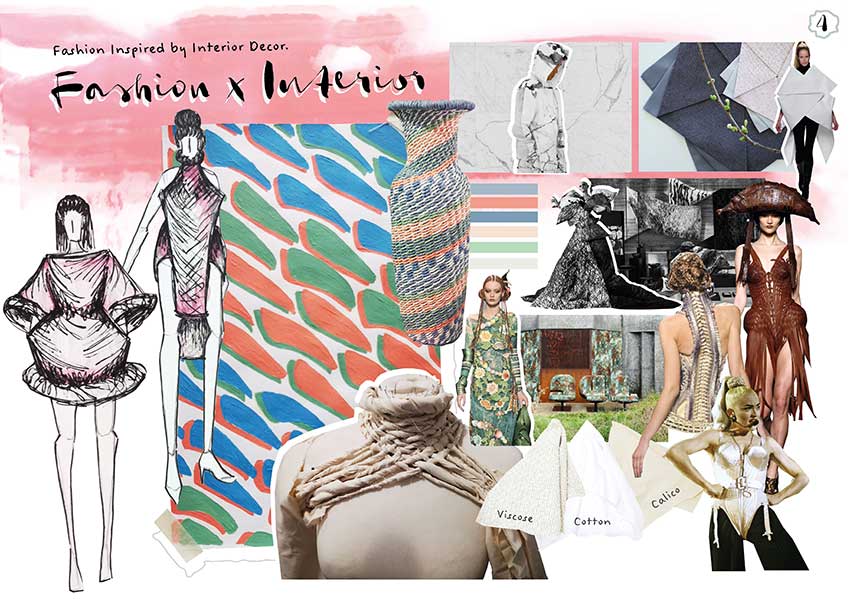
I explored trends via WGSN, an industry-standard trend forecaster that we have access to on the course. Here I found ‘Fashion x Interior’ a trend of fashion designers collaborating with décor brands such as IKEA to produce prints and furniture using their own unique style. This trend perfectly encapsulated what I was attempting to achieve, however instead of décor inspired by fashion I would be doing the reverse by producing a garment that represented an object in terms of colour palette, texture and technique.

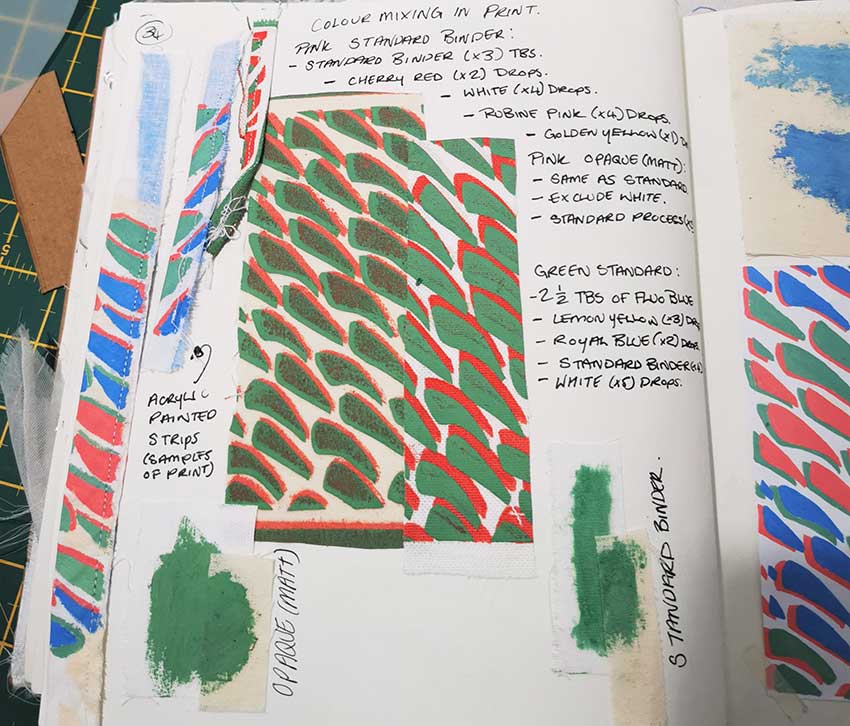
A key component for the project was to repurpose donated fabrics from IKEA. I focused on a white cotton based fabric as I felt it would be the easiest to work with when applying print techniques, as print was also a major aspect of our learning objectives for the project.
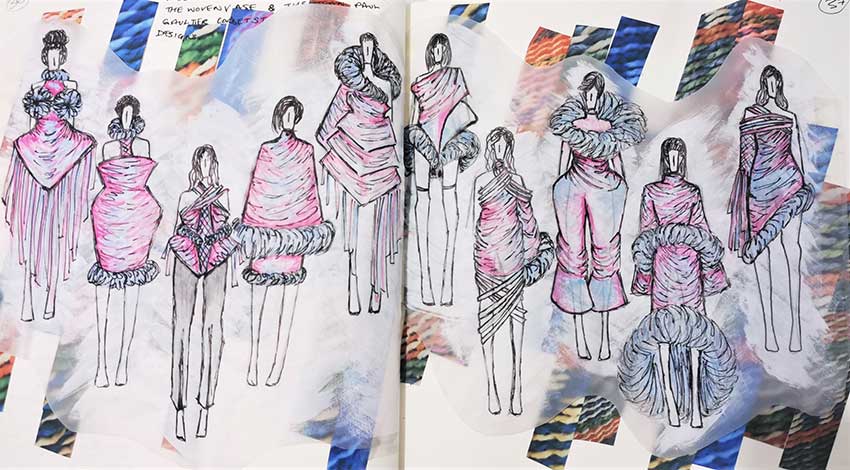
My main point of focus was a pastel woven vase, an organic base manipulated through textile technique and colour alterations. I felt this was the most sensible, visually appealing object to work with, as realistically there was a fabric limitation and weaving is produced commonly with thread and strips, so I was able to use my inspiration to my advantage.
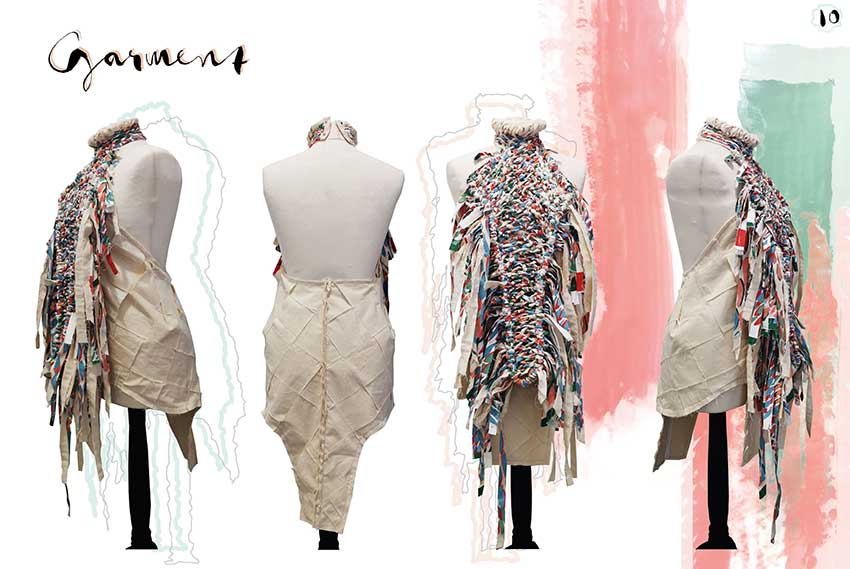
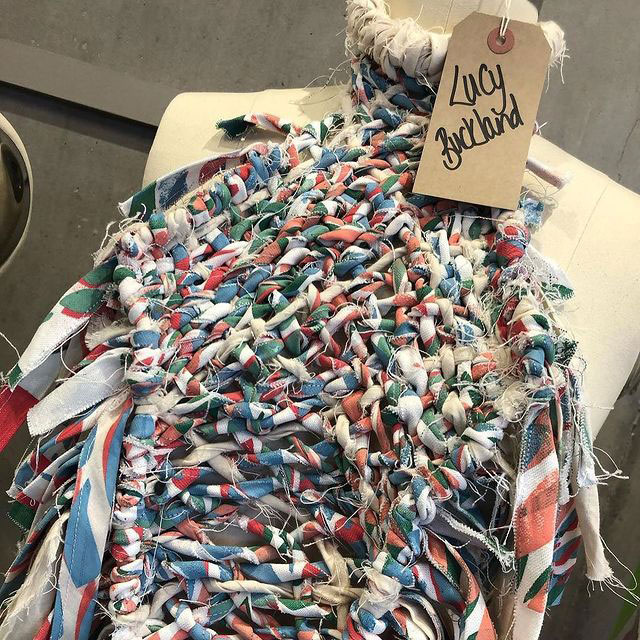
My final garment for the project is a body-con dress base featuring a woven halter-neck piece. I produced this piece with strips of printed fabric twisted, distressed then woven as it descends down bodice, forming the main focal point of the design. The distressing, weaving aspect of the printed fabric manipulation was the most enjoyable part of the project for me.
I learned a lot during this project about the print process, especially the amount of trial and error it takes in preparation of producing a successful print. I now believe that I am a more capable when it comes to using print as a visual format in my work.
Through this project I developed an understanding of what to expect from industry, especially in regards to time management and fabric limitations – it was a case of “what we have is what we’ve got, we have to make the best of what we can with that”. Being able to cope with limitations was a a really important concept for me to learn.
Sustainability was also major focus with this project, and we achieved this through the use of upcycling materials donated by IKEA. The materials were also Cotton based, a material which is commonly sustainably and/or organically produced.
I also approached the project with the ‘Anti-Fashion’ Movement in mind, which allowed me lean into the rustic approach of raw fabric edges, outward seams, as well as finishing and retaining excess fabric strips. This also led to less textile waste.